Daily Planets

Occupy the Moon? • Missouri Mars Mavens

Occupy the Moon?

The Trump administration's plan for NASA is taking shape, and that shape is lunar. This might seem like a sideshow, or even a travesty for those laser-focused on Mars exploration and settlement. However, there are advantages to creating a base on the Moon, where techniques and materials for space operations can be tested and refined at a distance of days, instead of months. Just as on the Moon, operations on Mars will require space suits that protect workers without exhausting them, materials that can stand the cold and the radiaton, and techniques to cope with dust and the rigors of low-atmosphere, low-gravity conditions.

Both Moon and Mars are expensive. The cost of freight to LEO, about $50k+ per kilogram in the Space-Shuttle era, dropped to about $10k by the 1990s, has steadily declined since, and might dip well under $1,000 per kilogram if SpaceX achieves its aims. Getting freight to the Moon can cost many times that amount, but that cost will come down, too, especially once refueling in LEO becomes practical. Space opportunities increase as costs come down.

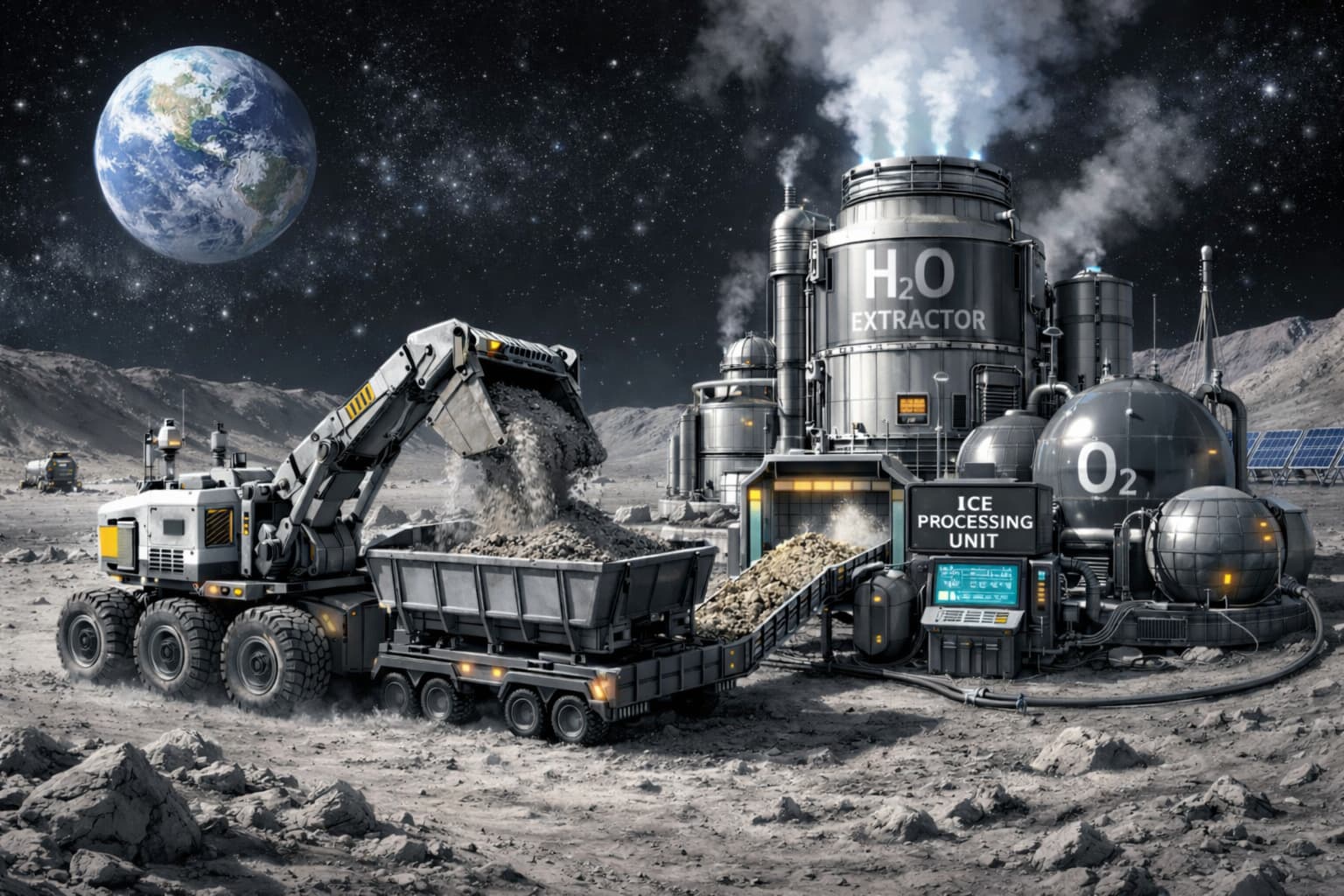
The Moon has water ice at the poles, a source of hydrogen and oxygen that would sustain a small base for a long time, given sufficient investment in nuclear and/or energy-producing equipment. Even so, you can make an excellent case for the idiocy of expanded continuous Moon operations, since the Moon offers little or nothing that can be shipped back for profit, harsh and limited living conditions for settlement, and only modest opportunities for scientific learning. As Robert Zubrin recently noted, the Moon is singularly resource-poor, whereas Mars has abundant amounts of useful ingredients. The Moon is a bad bet for going all in long term on human habitation. Mars is still the ultimate reachable prize for human expansion into space. However, if a Moon base doesn't suck up all the money, and NASA is smart enough to utilize each good Mars launch window as an opportunity to build infrastructure on and around Mars, then working on a Moon base now can be synergistic with plans to explore and settle Mars later.

Remember that space exploration rests on a three-legged stool. The principal driver, or "leg" for Moon operations at present is national pride, and especially national security. We still live in a era where trust between nations is dismally low. That won't always be the case, and someday the U.S. and China, for example, might cooperate peaceably and fruitfully on space endeavors. For now, though, it pays for each nation to get there as fast as they safely can, and make sure the other does not get to use the Moon as their own private launching platform for mayhem. I don't think Elon Musk has lost interest in Mars, but tapping into U.S. government funding, in the form of contracts to support Moon-base creation, must be an irresistible lure that prompts him to go along with lunar plans, at least in the near term.

Remember, in business it's all about the Benjamins.

Kevin Kelly, February 15, 2026

References

Sources and follow-up reading:

  • Scientific American Article by Jackie Flynn Morgensen on plans for a nuclear reactor on the Moon, which could power processing of water ice near the poles to produce water and oxygen.
  • Article on origins of oxygen and nitrogen found in lunar soil . This is technically interesting, but impractical for resource creation, due to the immense costs and power requirements of extracting from lunar regolith. Stick with ice instead.
  • Articles on advantages and (mostly) disadvantages of a lunar orbital gateway include this blog by Casey Handmer, and this article in The Space Review . A gateway makes sense for a place suitable for human habitation, like Mars, but not for the Moon.
  • No one knows what path takes us from where we are to having humans living on Mars. But if we dare to imagine, it primes our brains to ask questions that need answering, and reveals what needs to happen to enable the dream to become reality. Broadly, there are three motives for space exploration:

    * Scientific curiosity: leading to understanding and innovation
    * Nation-state concerns: if your flag isn't out there, your people get left out
    * Commercial activities: creating prosperity by harvesting or making goods for trade

    Think of these as three legs of a stool. When one is too long, the stool is unstable. Here's a story about one possible route, where six adventurers accept the challenge to set up a Martian base.